Yang
National money
Comes from outside. Can be hoarded and made scarce. Good for buying from the world.
 Institute
Time, skills, food and care, traded between neighbours and counted fairly. The yin currency Stina's book says a village cannot thrive without.

The Queen Bee and the Ledger · 7 min · Watch on YouTube
A shared ledger. Members offer what they can do or grow and trade with each other in local credits. Every account starts at zero.
Give an hour of carpentry and your account goes up while the other person's goes down. A minus is not a debt to a bank. It is a promise to give something back to the village. No interest is charged, and nobody can buy their way in. The idea began with Michael Linton in the Comox Valley, Canada, in 1983.
LETS users won't get rich, but neither will they ever be debt slaves.
Stina Kerans, Can't Buy Property?
Comes from outside. Can be hoarded and made scarce. Good for buying from the world.
Made inside the group when people trade, and cannot be hoarded. Good for care, help and the work money ignores. The idea comes from Bernard Lietaer's work on complementary currencies.
Someone with little cash and a lot of skill can take part fully from the first day, and a resident in a hard patch has another way to pay their way.
In the early nineties Stina and the original team ran a LETS on the Young Street site, through markets held every Friday evening. Stina's book counts it as the second in Australia. Its units were called Qbees.
It ended when the market was closed and moved to Canberra for more room, and the energy died. The Narooma motel ran an exchange too, and it collapsed the same way when part of it was moved. The founding rule of the new system comes from both: an exchange lives where its people are.
Young Street, the Institute's bush block, the farm near Bungendore and Narooma all sit within about seventy kilometres of each other. Each has its own character, its own legends and its own economy. One ledger lets them trade while each stays itself.
In the city village, the not for profit that runs the Commons will run the exchange alongside the cafe, guest rooms, storage and car pool, so the LETS is part of daily life rather than an extra. Trades who build the village can take part of their pay in shares, certified first, and the ledger keeps that record.
Farmers at the regional permaculture gathering said the same thing: there is no good way to tell each other what is surplus, or to trade it. The first use of the network will be food. Growers across the region list what they have and trade it through the Sun Villages LETS, so good food is eaten rather than wasted.

6 min · How local credit works, and why it is lawful.

2 min · The village exchange, in its own voice.

1 min · The consoles that let a small board run a village.

Short · The ledger, in under a minute.
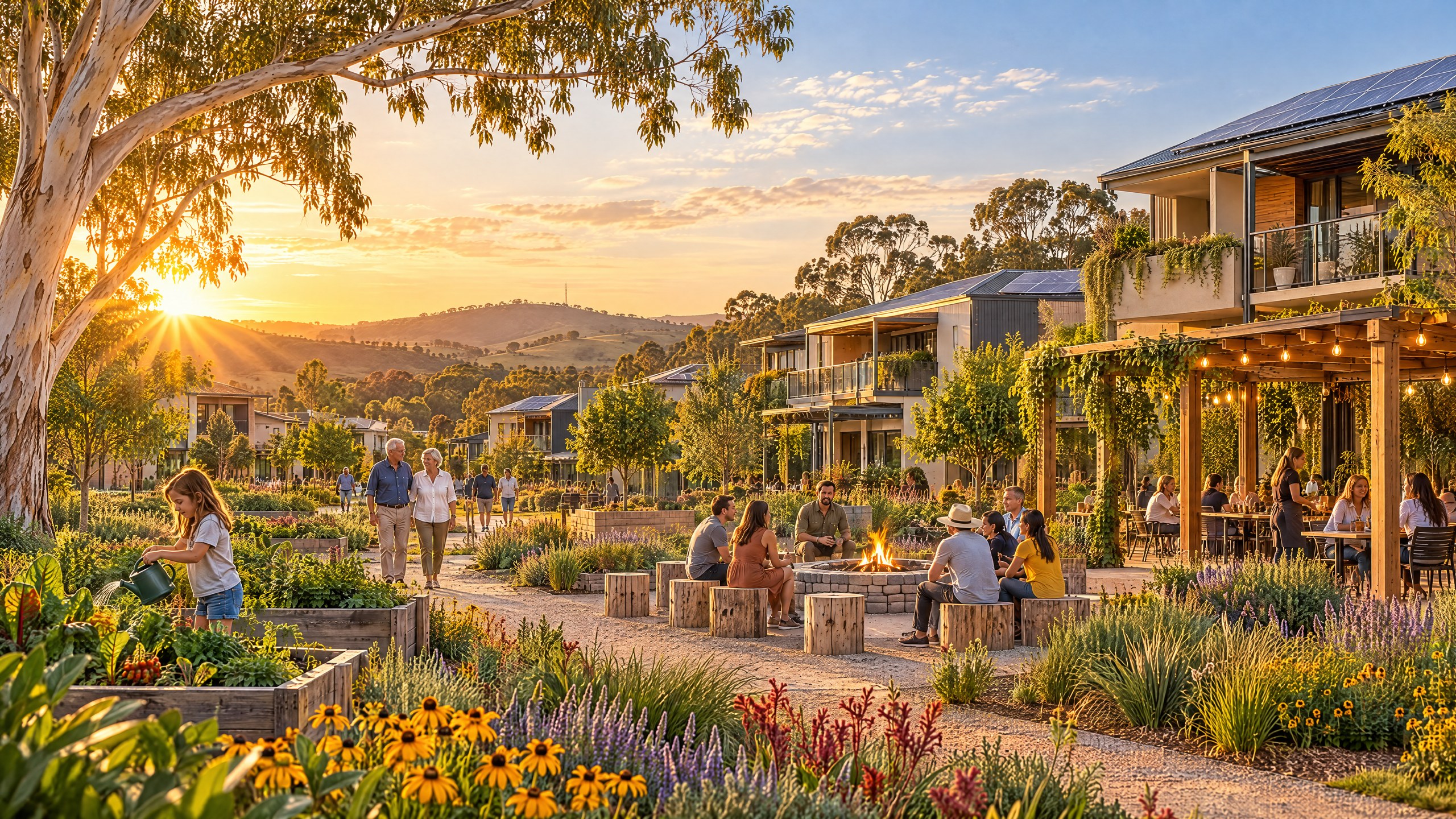
The background picture on this page is an illustration of the village idea, not a photograph of a Sun Villages site.